June 14, 2024
Yoroshiku is Japanese phrase conveying something along the “please take care of me” lines. But, I can also say… 4649!
Goroawase — what is it and how does it work?
Goroawase is a Japanese-only phenomenon. A game of sort, or a riddle, revolving around conveying letters by means of numbers.
Numbers in English:
0 zero, o, null
1 one, first
2 two, second
3 three
4 four
5 five
6 six
... okay, you know the drill. And now!
Numbers in Japanese:
0 re, rei, ze, wa, ma, maru, zero, o
1 ichi, i, wan, hi, hito
2 ni, ji, fu, futa, bu, pu, tsū
3 san, sa, za, mitsu, mi, su, suri
4 yon, yo, shi, fō, ho
5 go, ko, itsui, i, faibu
6 roku, ro, ru, ra, mu
7 shichi, nana, na
8 hachi, ha, ba, ya
9 kyū, ku, gu, ko
10 tō, jū, ten
As you can see, numbers in Japanese have multiple reading — and those above are not even all of them, since in certain cases one can use even less common readings, like mahjong terms. This diversity comes from the nature of the language, taking inspirations from Chinese and even English, as seen by the bold readings.
Goroawase works because numbers readings in Japanese often correspond to the smallest building blocks of the language - single hiragana characters.
Source: busuu.com with my assignments of numbers to individual characters
More than half of the Japanese alphabet can be covered in this way! And so, using numbers as a replacement of letters become quite easy.
In English, the closest thing to goroawase would be words like 2day, 4get or gr8.
Limitations and traps
1. different readings of the numbers means different possible variations
2. the more numbers, the more difficult the “puzzle” becomes, so goroawase is usually kept rather short
3. “10” can be mistaken for “1” and “0” and vice versa
4. not all of the Japanese alphabet can be covered by numbers, so sometimes the closest readings are used, resulting in a bit of a stretch reading, for example:
Ryo -> 6(ro)
Te -> 10(ten)
Due to the nature of this phenomenon, it really cannot be translated in any way. Due to that, many people may be unaware of the popularity of this wordplay, which can really be spotted everywhere in Japan.
So, let’s dive to some interesting goroawase examples!
Days and holidays
11/21 — i i bu i
Pokemon names in the original are pronounced slightly differently, also Eevee is iibui. As of 2018, November 21 is celebrated as Eevee Day… officially!
The Eevee Project has been certified by the Japan Association for setting official dates
2/22 — ni ni ni
A special day for cat lovers. “Ni ni ni” is close to “nya nya nya” which is just a Japanese version of “meow meow meow”.
Sources: www.atpress.ne.jp , store.ux-xu.com and the official ad displayed in Shinjuku at 2022/2/22
11/1 — one one one — wan wan wan
Of course, there is also a day for doggies. “wan wan wan” is a Japanese onomatopoeia for dogs woofing.
Source: prtimes.jp and dezamin.com
11/04 — i i o shi
There is it. The Nice Butt day.
Ii means nice, but the second word (oshiri — butt) lacks “ri”. Goroawase forgives shortcomings like that. Even without the last syllable, it’s easy to guess what it’s about.
Source: Reddit
29 — ni ku
"Niku" means “meat”. And so on the 29th day of the month you can encounter discounts in various restaurants.
Source: GyuKaku and a Mos Burger chain ad, where Wrestler Kazuchika Okada encourages people to buy the New Muscle Meat Burger on the 29th of each month
Names and Buildings
Suda51 — suda go ichi
Suda Goichi, a game designer, writer and game director (No More Heroes, Black Knight Sword, Lollipop Chainsaw, etc.), takes advantage of the fact that his name consists of “go,” meaning 5, and “ichi,” meaning 1.
893 — ya ku za
Yakuza members prefer to call themselves Gokudō.
The word “Yakuza”, more famous overseas, originally comes from the traditional Japanese card game Oicho-Kabu, played with Hanafuda cards.
Photo of a cards by Yamanaka Tamaki
One of the worse sets possible in this game is the 8 + 9 + 3 card combination, resuluting in 0 points. So originally, “yakuza” was a pejorative name describing… the losers.
634 — mu sa shi
Tokyo Skytree, the largest tower in the world, is 634 meters tall.
Musashi is the historical name of the province that includes Tokyo, part of Saitama Prefecture and a section of Kanagawa Prefecture.
109 — Tokyu
A popular department store in Shibuya has number “109” on it. Tokyu is a name of a Corporation which the store is operated by.
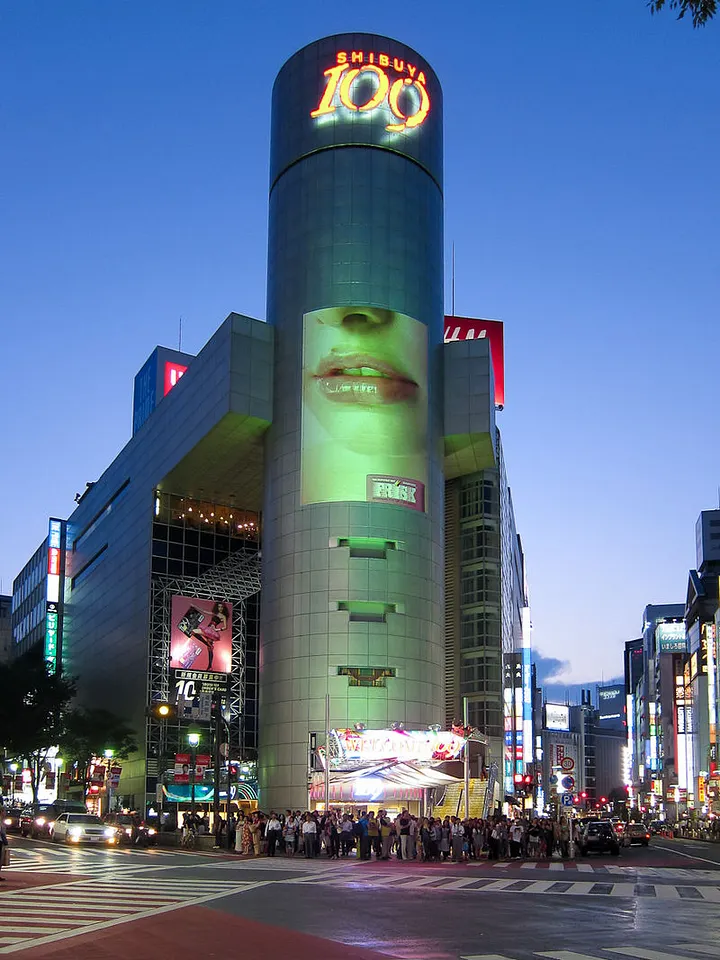
Source: Wikimedia

Fun fact — since this building is a very prominent landmark in Shibuya, a special 109 emoji was created by a mobile carrier Softbank (but was
removed in iOS 5).

Source: iemoji.com
Education and business
Memorization
Goroawase is a great memorization tool. Instead of remembering certain dates or numbers as a, well, just numbers, one can try memorizing them using wordplay.
1492 — discovery of America by Columbus — i yo ku ni= “A good country”
42.195 — the length of a marathon course in kilometres — shi ni i ku go = “Go to die, go”
6480 — mu shi ba zero
"Mushiba zero" means “zero cavities”. Many dentists include this catchy sequence in their telephone numbers!
573 — ko na mi
This company not only include “573” in the official social media handles or phone numbers…
… but also in their games!
Dance Dance Revolution Best of Cool Dancers — High Score Screen
Gradius — Default High Score
Many more examples of the use of “573” in Konami games can be found on the TVTropes website.
765 — na mu ko
Or rather, Namco. Another game company that hides its goroawase in all sorts of places.
One of the achievements in Taiko no Tatsujin V Version is to perform 76500 hits:
Some references even make their way into the games’ lore — In Tales of the Abyss, a year has 765 days!
23 — ni san
Since 1986, Nissan most iconic racing cars compete under the number 23 — and it’s not coincidental. “23” can be read as ni san.
Source: Source: Nissan materials
The company also make sure to include “23” in their phone numbers.
Games, Anime and Internet
One Piece
Why aren’t the bounties for these characters rounded out nicely somehow? And that’s because there are hidden puns in them.
88 — ha ha. Ha ha means “mom” in Japanese, and the first wanted character is a captain of the “Big Mom” crew
46 — shi ro. Shiro means “white” and the wanted character is commonly known as “Whitebeard”
648 — ro shi ya — That’s a slight stretch on a name “Roger”
See the “56” on young Monkey D. Luffy shirt? It can be read as “go mu”, or rather… gum. Which is a perfect for this protagonist with a rubber-like body.
Soul Eater
42–42–564 — shi ni — shi ni — go ro shi
This is the number for the god of death meaning “Death Death Murder”
Pokemon Sword & Shield
The numbers on the trainers’ pants refer to the type of Pokémon the trainers in question favors.
831 — ya sa i — vegetables (grass type)
049 — o yo gu — swimming (water type)
193 — i ku sa — fight (fighting type)
291 — ni ku i — hatred (dark type)
Persona 4
10/4 — ten shi
October 4th is a birthday for a Justice Arcana representant, allowing player to create stronger Angel Personas. Angel in Japanese is “tenshi” and 10/4 can be read as such.
Yakuza Series
Yakuza again, this time, (one of my favourite) game series. Here, goroawase is used cleverly with a help of… pagers.
Instead of sending phone number to which the recipient is supposed to call (as the intended use of pagers), here, an extremally short message is sent. 724106 — na ni shi te ru —what are you up to? Here, 1 and 0 are made to be read as ten.
Sailor Moon
Another clever use of pager (no wonder they were popular in Japan). 8451 can be read as ha yo go ichi, which after some small modifications, loosely transforms into hayaku koi — come quickly.
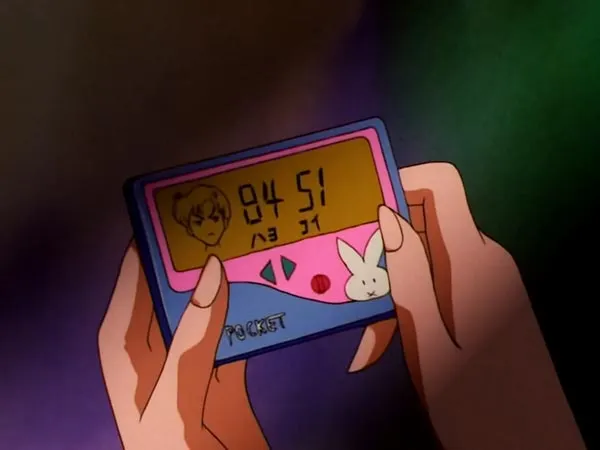
Source: japanesewithanime.com
888 — pachi pachi pachi
Pachi pachi pachi is an onomatopeia for clapping and can be spotted on various live chats, especially after receiving some good news.
39 (san kyu) for reading!
Of course, those are only a few examples.
Next time you immerse yourself in Japanese pop culture or walk the streets of Tokyo, maybe you’ll wonder if the numbers you see have any secondary meaning…
Want to read more?
Here are my resources:
- Japanese Numbers, Dates, and Wordplay https://legendsoflocalization.com/
- [PL] Goroawase: Co znaczą “specjalne” liczby w grach | arhn.edu https://www.youtube.com/watch?v=-uxtEjK2IBM
- HOW TO READ YAKUZA ZERO’S PERPLEXING PAGER CODES https://lostinlocalization.com/
- GOROAWASE: JAPANESE NUMBERS WORDPLAY https://www.tofugu.com/
- What is the origin of yakuza?https://www.sljfaq.org/
- Japanese wordplay _https://en.wikipedia.org/