June 3, 2024
Definitely one of my most memorable trips.
I went to Chernobyl with strefazero.org (and it's the only one I can recommend, verified by me and friends) for the whole 3 days of sightseeing in the Exclusion Zone and 1 day in Kiev. Including commuting, the trip took a week, and cost less than 2k PLN. The price included everything we need (and if we needed to buy anything extra, the prices in Ukraine were ridiculously low) - transit, accommodation, guided tours in the Zone Zero and even one evening of a traditional Ukrainian feast. The only requirements were being a legal age and having a valid passport (VERY IMPORTANT! No chance of getting there without it).
We left Warsaw for a long, exhausting night drive, a little queue at the border (which can make the trip much longer, depending on the humor of the border guards) and that's it. We were accommodated in the town of Slawutych - there we slept and had breakfast every day at a local pub.
Each morning, a free exterritorial train took us to the Exclusion Zone along with power plant workers. They one-way journey lasted 45 minutes. There are about 3 trains in the morning and 3 in the evening - we always took the earliest one and returned on the last one to maximize our stay in the Zone.
Around the Zone, we had to move around in a special buses operated by a drivers employed in a power plant. It is a veeeery vast area.
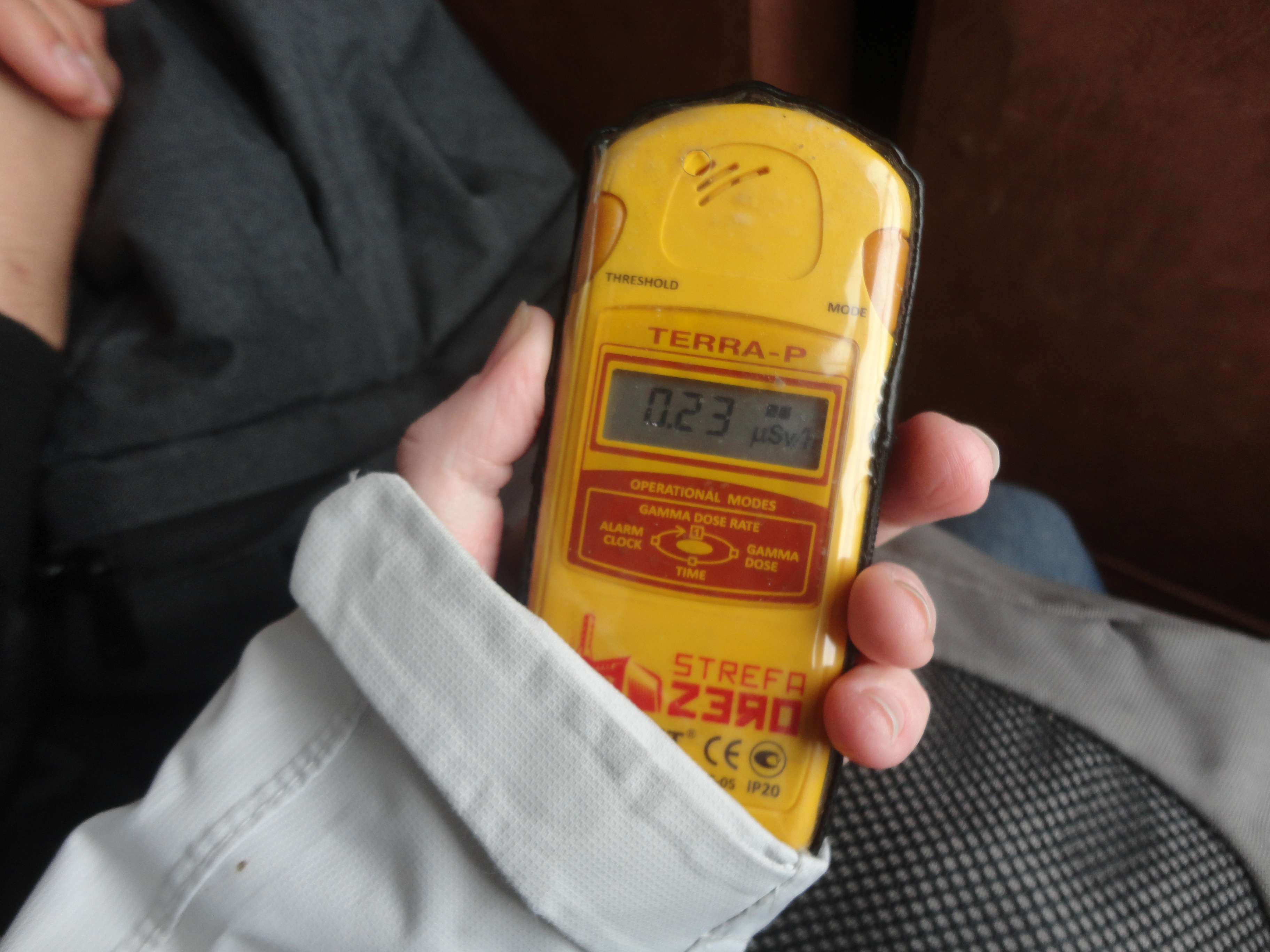
At the entrance to the zone radiation of 0.23μSv/h - less than in Warsaw. But... I also have a photo of 36.57 on the meter.
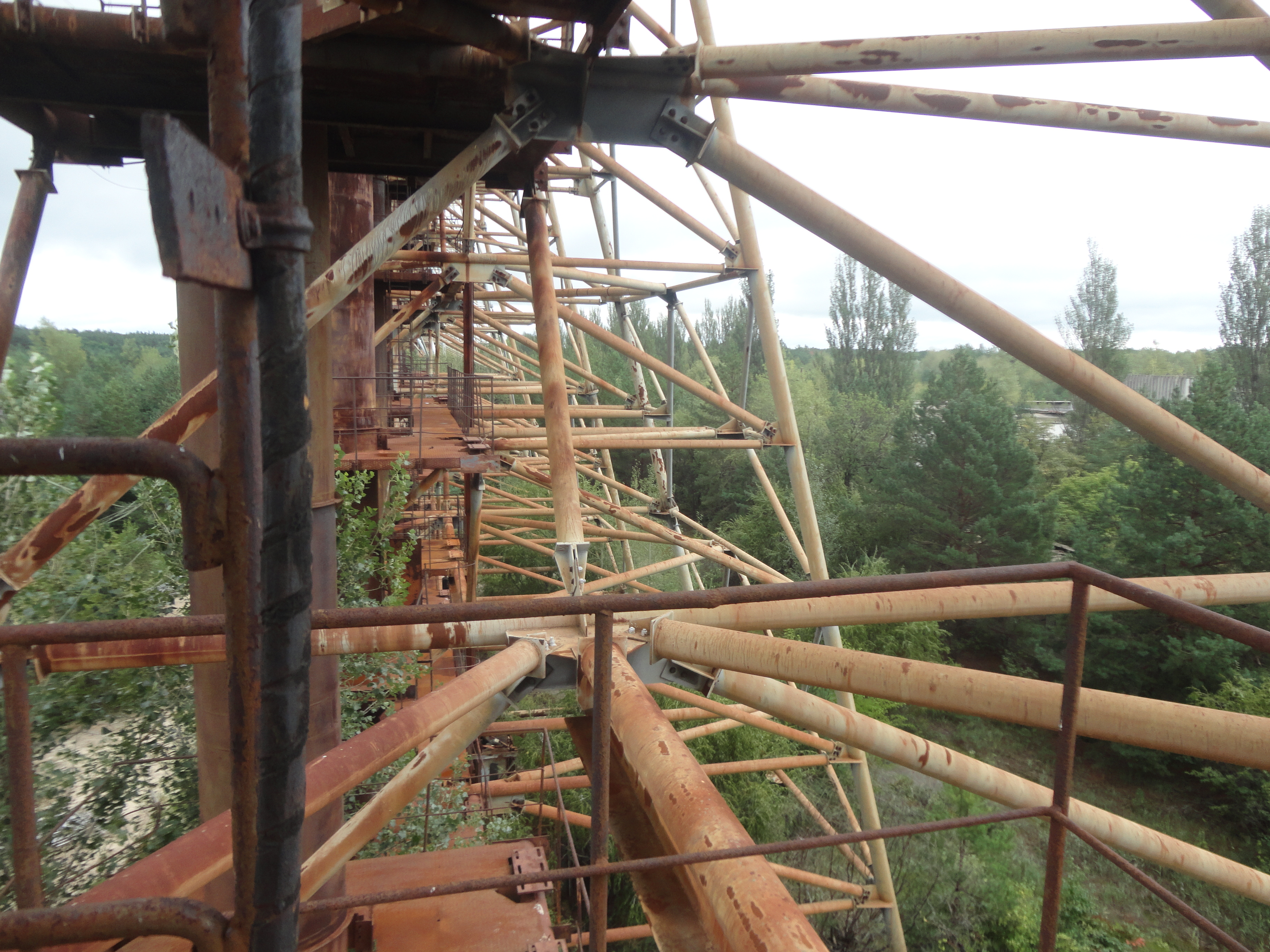
First stop!
The feel of this place in unreal. Even more unreal when the geiger counter speeds up in certain regions. Despite a few hotspots, the Zone is relatively safe. Some places have less radiation then big cities in Europe. Just walking around the area is perfectly safe, but unfortunately much of the pollution has subsided and seeped into the soil making it impossible to raise plants or animals, for example, so living there further is described as dangerous.
It's hard to find similar silence anywhere else in the world. In the national parks you can hear other tourists, in the forests you can hear the birds. Even in the countryside you can hear some distant neighbours or at least feel humans through the glow of light hovering over the cities in the area - there is none of that in the Zone. No people, no lights. At most, a cat or fox will run down the street, so unfamiliar with people that it comes up to eat out of your hand.
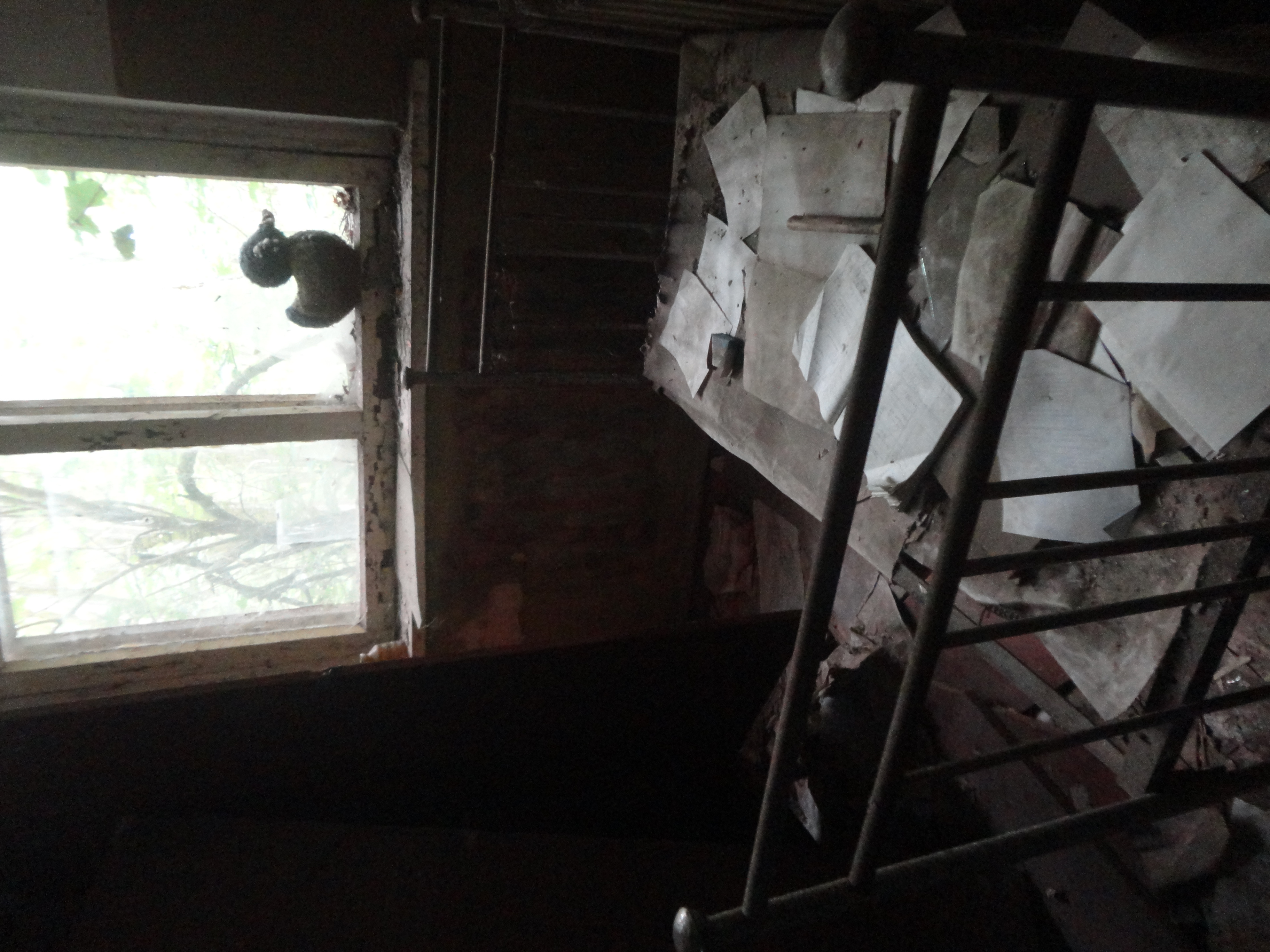
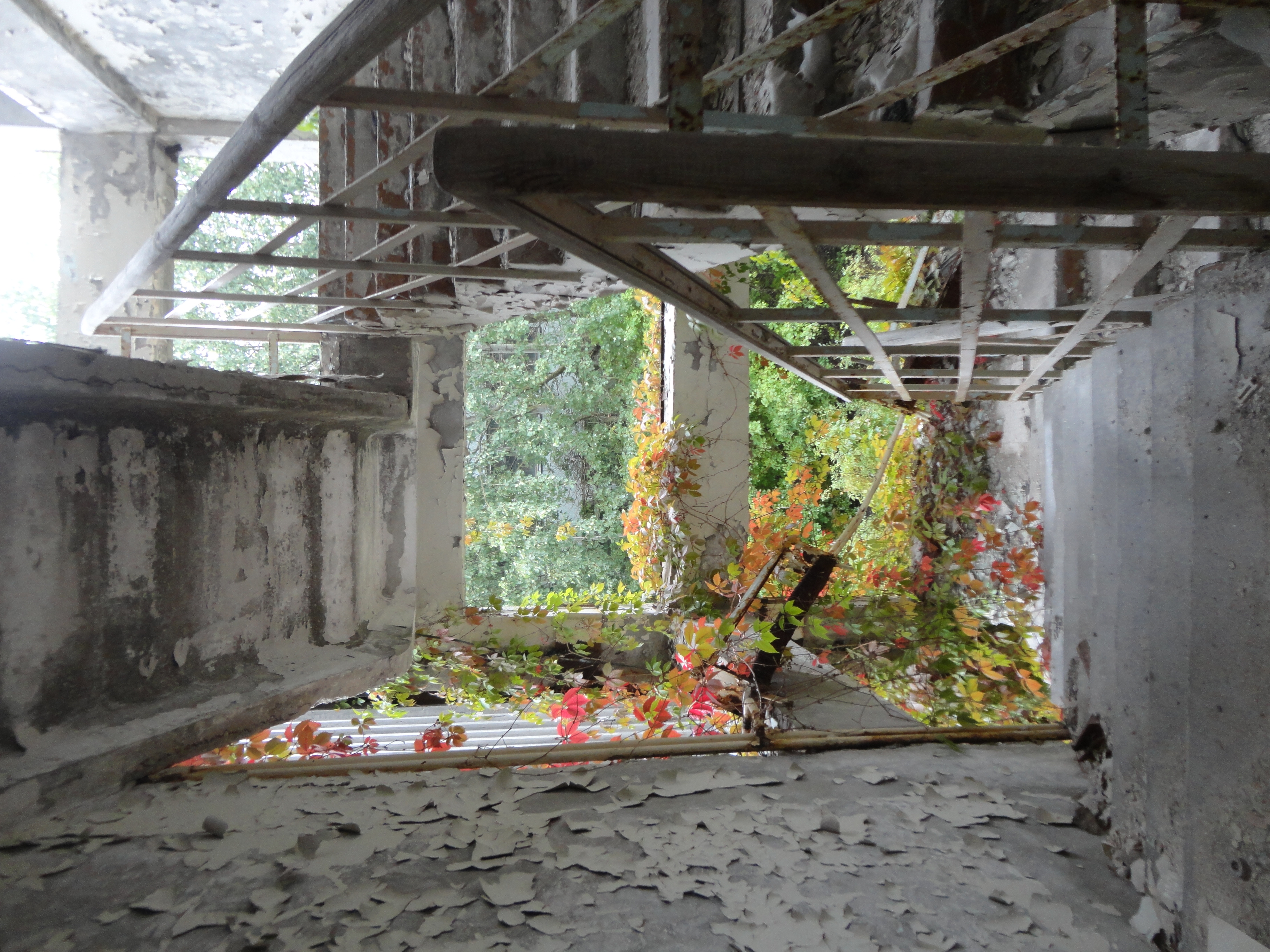
Whole city abanadoned, slowly being reclaimed by nature. An urban explorer, stalker and post-apo enjoyers dream. The views from Chernobyl are unforgettable. Blocks, houses, hospitals, schools, structures, kindergartens, stadiums and factories - all shabby, ivy-covered, with grass and weeds sprouting from every conceivable spot - await discovery. Nature has a hold there. The toys, books and all sorts of everyday things left behind can transport visitors to the past.

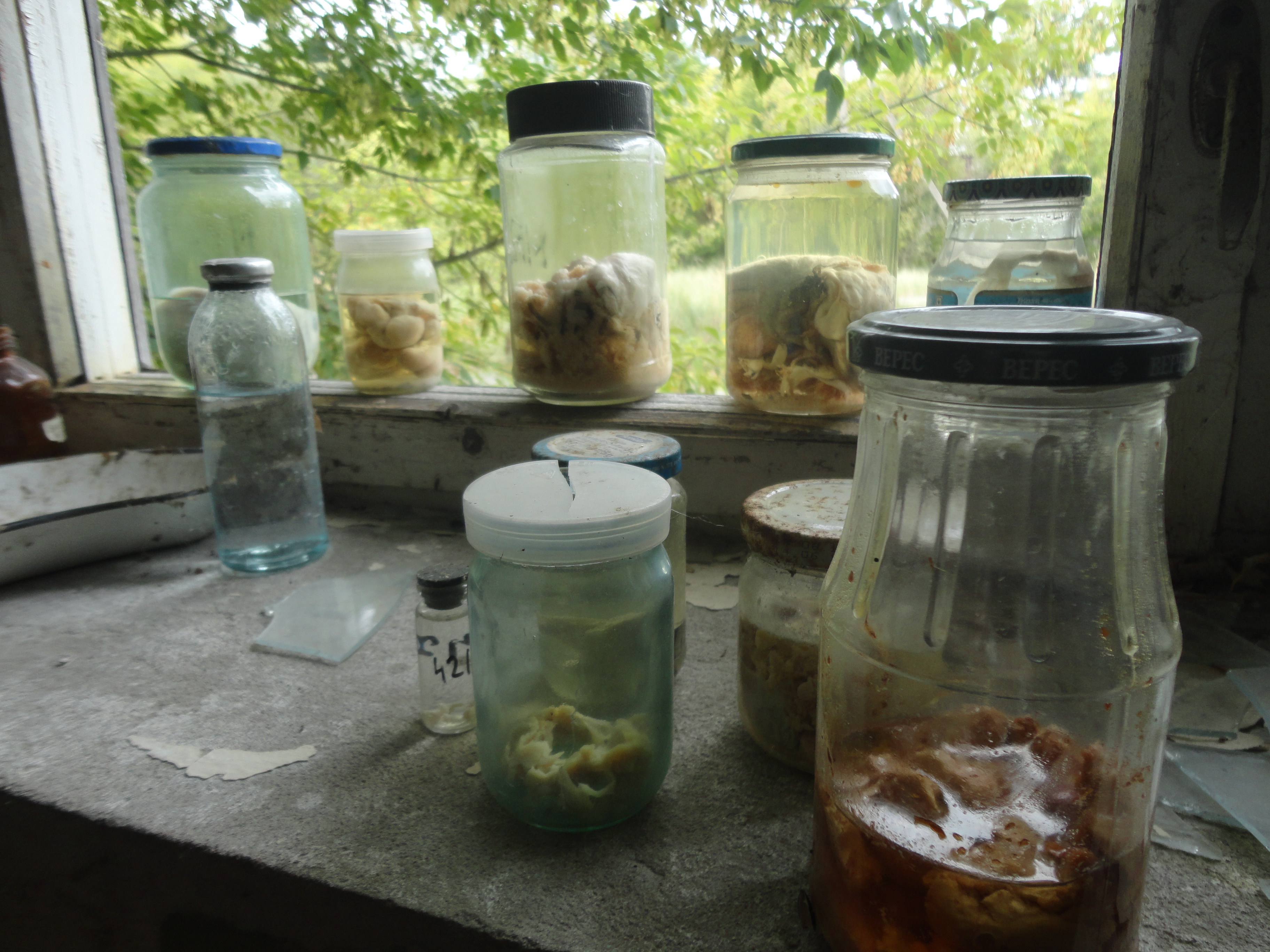
Not everywhere was safe. Sometimes it was a matter of rusty or missing railings, and sometimes a hole in the ground with no visible bottom. In some places the radiation was very strong - but such hotspots were always marked with special signs. Of course, one can venture into the most difficult areas as well, necessarily in decent shoes, with a flashlight and protective clothing, all at one's own risk, of course.
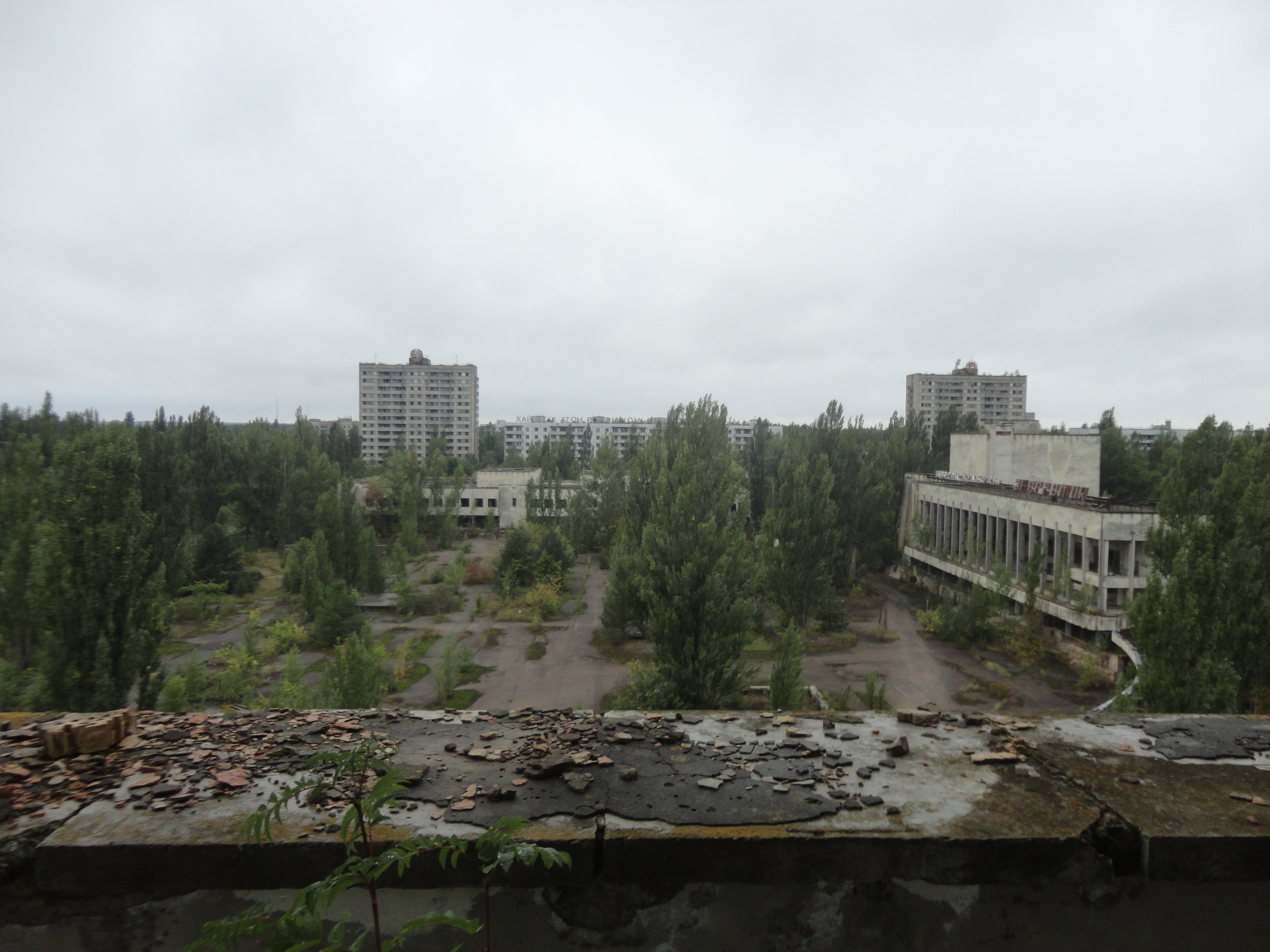
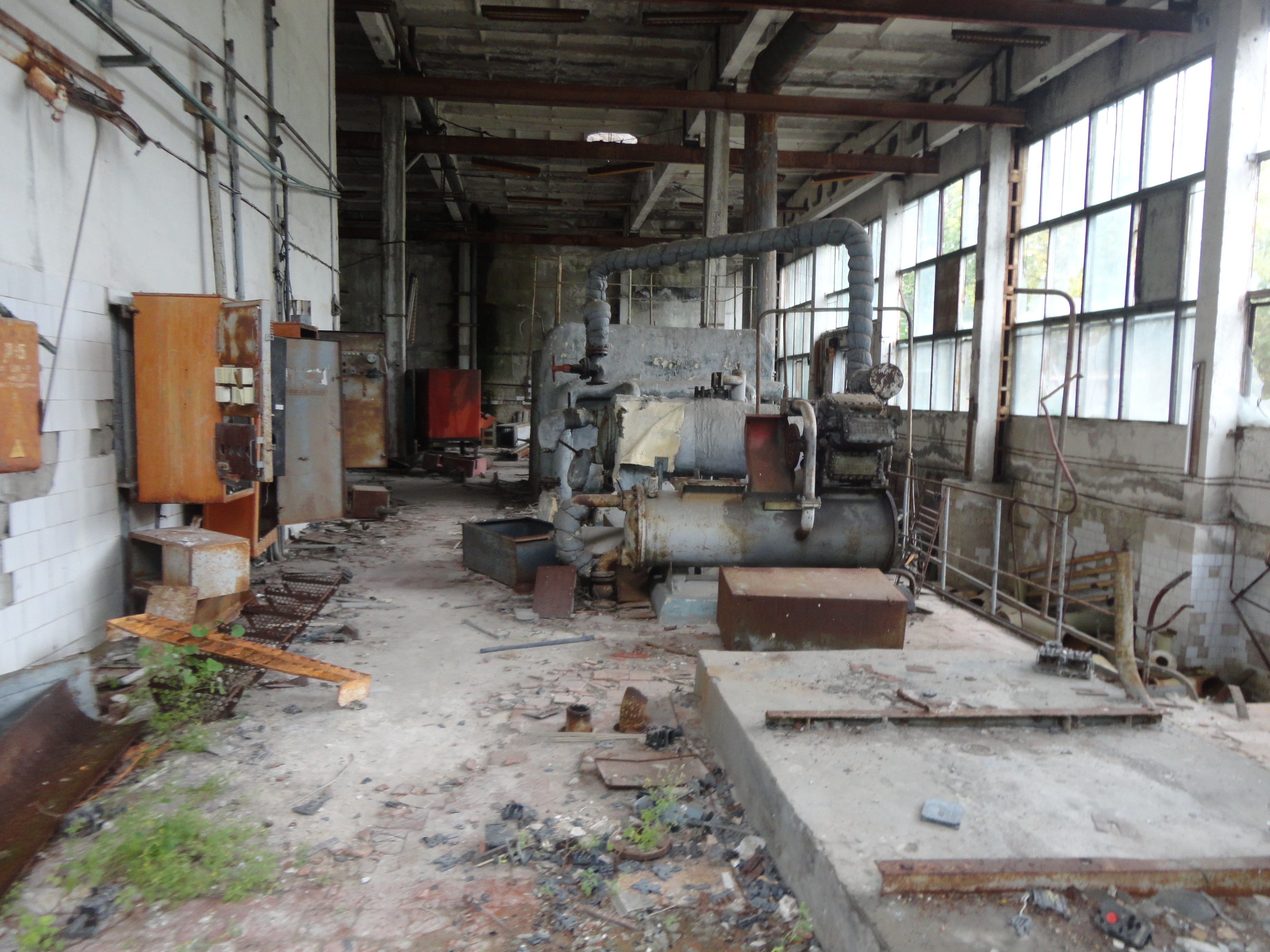
Contrary to the notion that many people may have, Exclusion Zone is not at all uninhabited. As I wrote before - we shared the ride to the Zone with power plant workers. Aside of that, our drivers and some other power plant workers (who have to work at night) live in Chernobyl on a two-week shifts basis (2 weeks there, 2 weeks at home) - there are several hundred people living there in rotation in total. They even have a convenience store, with alcohol making aroung the half of the available assortment.
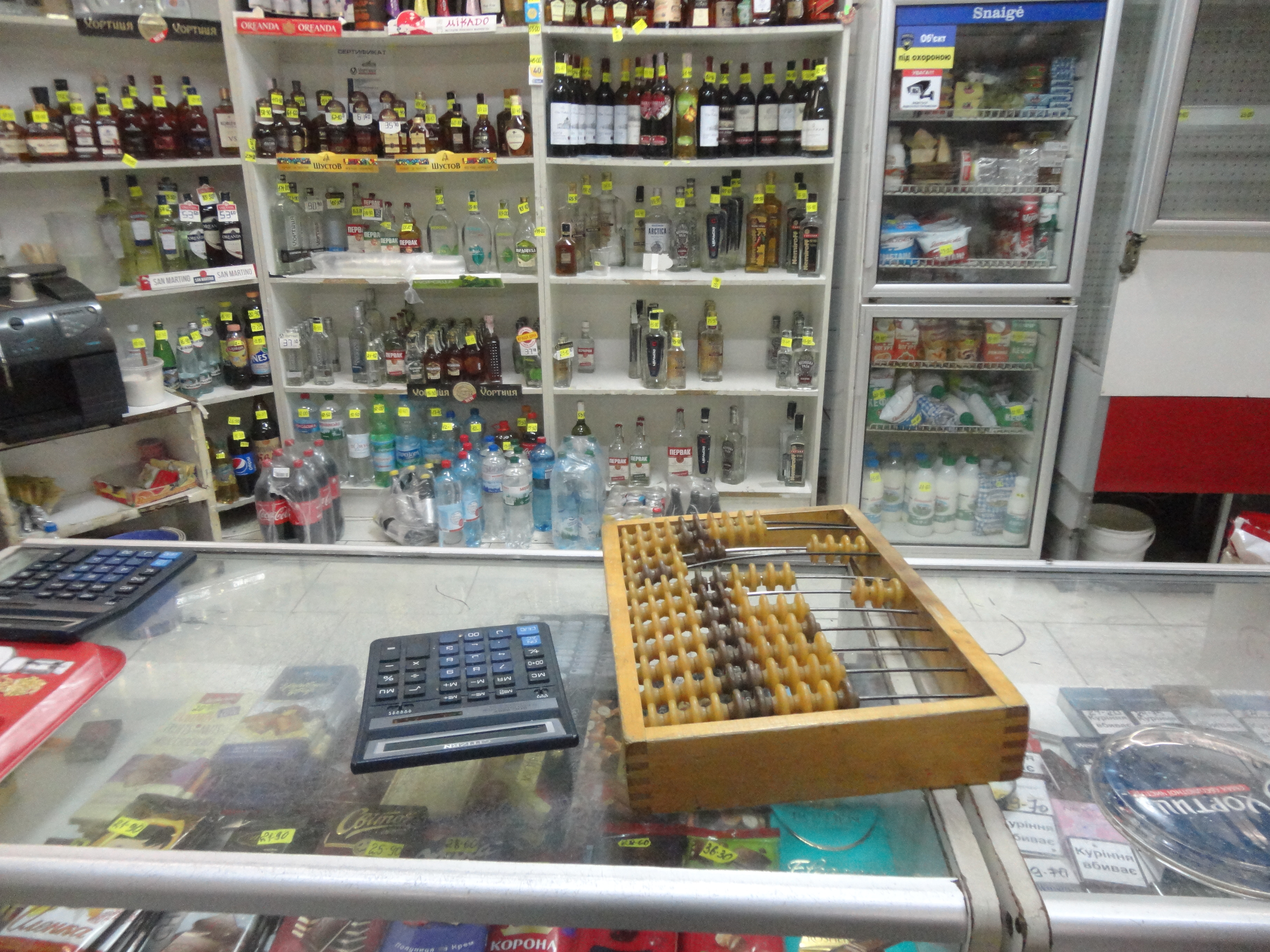
Shop. Lots of alcohol, cigarettes and this cute abacus...
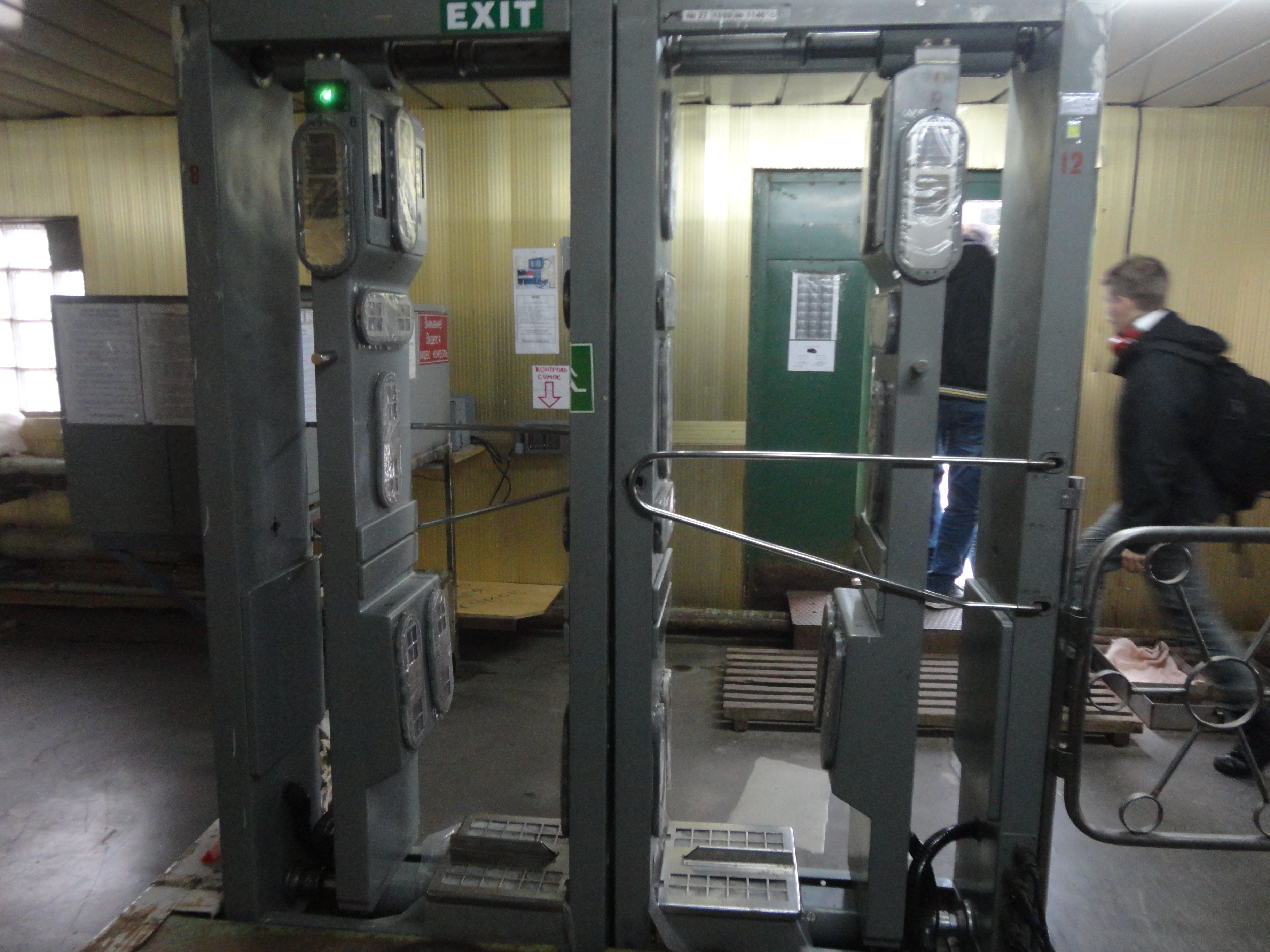
Radiaton monitoring gate - those were present before entering the Zone and canteen. You stand on it, and place both hands on the side, below green light.
At the time of my visit, the Chernobyl power plant continued to operate - the infamous reactor was shielded by a concrete arch, but the rest of the reactors were being taking out of service, which were supposed to take years. Of course, taking power plants out of service is not the best business. Wages have to be paid, no energy comes from it, plus waste has to be taken care of...
We managed to visit the power plant itself, as well as eat our lunches in the employee cafeteria - right after passing through the radiation monitoring gates!
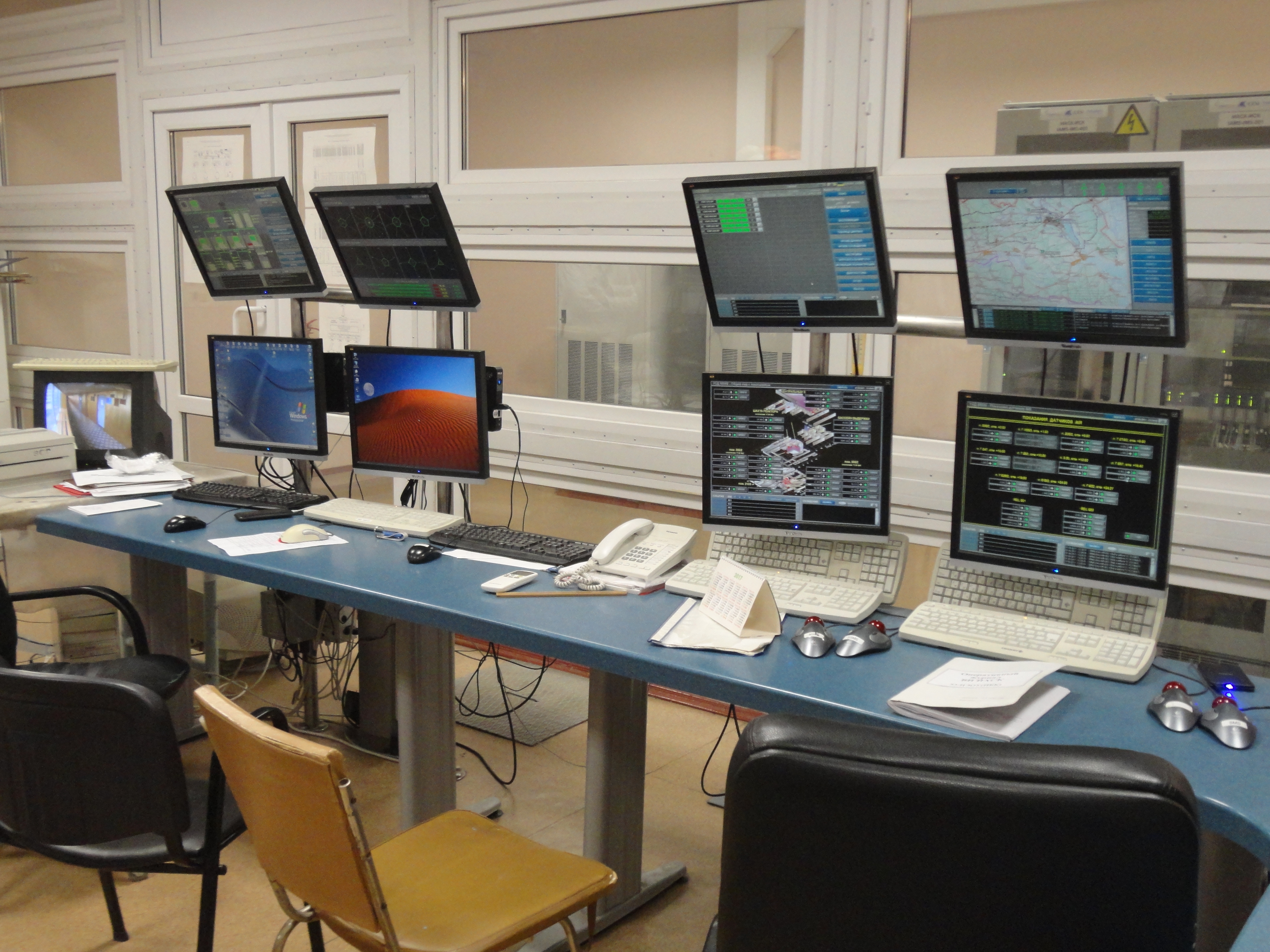
Inside the power plant.

And this is how the dinner in the worker's canteen looked like