February 2, 2024
ZPG (zero-player game) is the kind of game that… play itself. The player doesn’t have to use the keyboard, click, tap or even visit the game regularly for it to progress.
To start most ZPGs, a player only need to set a few initial parameters and the rest happens on its own. Some ZPGs offer the possibility of some subtle gameplay modifications, but these are entirely optional.
Why?
Probably the first thing that comes to mind is “What’s the point of a game you can only watch, anyway?”. Isn’t interactivity, the ability to explore the world on your own, exercising your brain and reflexes the very aspects that attract people to this activity?
Not always! This is clearly shown by the popularity of streamers, youtubers offering let’s plays, or people cheering for their favorite teams at e-sports championships. In fact, who hasn’t watched a friend, sibling, significant other or family member level up? These activities offer a similar experience to ZPGs — they provide “just” watching a game that you often have no influence on. Despite this, millions of people sit in front of Twitch every day to watch others play.
The biggest difference between following streamers and ZPGs seems to be the social aspect (although multiplayer ZPGs exist too!). Charismatic players, their comments and an active community of fans enjoying similar titles is something that attracts and keeps many people for a long time.
With its low (zero, haha) entry threshold, ZPGs mainly attracts people who:
- like games, but don’t have much time for them. It doesn’t matter if you get into ZPG once a day or once a year — there are no penalties, a dead hero, or a complicated plot to catch up on
- want to experience the adventure and development of the virtual hero, observe how changing the initial parameters affects his story
- looking for something to… to laugh. Humor very often accompanies ZPGs
Examples of zero-player games
There are not many games of the ZPG genre on the market, and most of the productions are rather old. However, this does not mean that there are no interesting titles or constantly updated positions among them!
Progress Quest
One of the first ZPG titles to gain popularity and inspire subsequent similar productions is Progress Quest (online and downloadable version).
The game was created in 2002. Initially, it was intended to… parody the MMORPGs of the time and their auto-attack mechanics.

Character creation process
The developers didn’t limit themselves to just making fun of auto-attacks. They parodied many other elements of RPG games — from character creation, through collecting items, to quests.

Progress Quest in action
The game’s design was memorable even to Todd Howard, executive producer of Bethesda studio. He pointed out that Progress Quest was an inspiration while he was creating the Fallout Shelter.
Godville
My personal favorite — Godville. It’s a free online, Android and iOS game iOS, inspired by Progress Quest described above. It debuted in 2007 — initially the production was Russian-language, but three years later it also gained an English-language version.
The player takes on the role of a fantastical god overseeing a religious (and moderately intelligent) hero/heroine. The fictional character recounts his or her adventures and travels through journal entries. With time, gathering experience for killing monsters and completing quests, other mechanics such as learning skills, having a pet companion or joining a guild become unlocked.
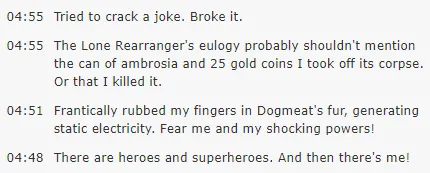
Random journal entries
The hero/heroine can be controlled to a small extent by text commands, as well as rewards and punishments (excessive use of only the carrot or whip temporarily affects the character’s morality).
Interestingly, Godville is a game… multiplayer! Joining a guild, the player can chat with others, has the ability to duel PvP, and from time to time in the diary are shown entries addressed by other gods to their heroes/heroines. All of these features are optional, though.
The community is also present in other areas of the game and has a real influence on its shape. Players propose their own journal entries, quests and artifacts. They can also integrate on the forum and create the lore, which is available in the form of an extensive, constantly updated GodWiki.
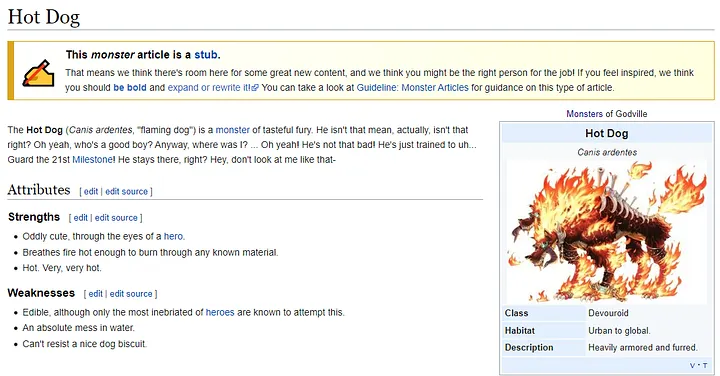
"Hot Dog" enemy description in GodWiki
CLICKPOCALYPSE 2
ZPGs are not just text-based games. An example of a more graphic production is Clickpocalypse 2 (online Android and iOS, successor to the clicker Clickpocalypse).
The difference from previous productions is also the ability to choose not one, but several characters. After creating a party you can set it off to the dunj!
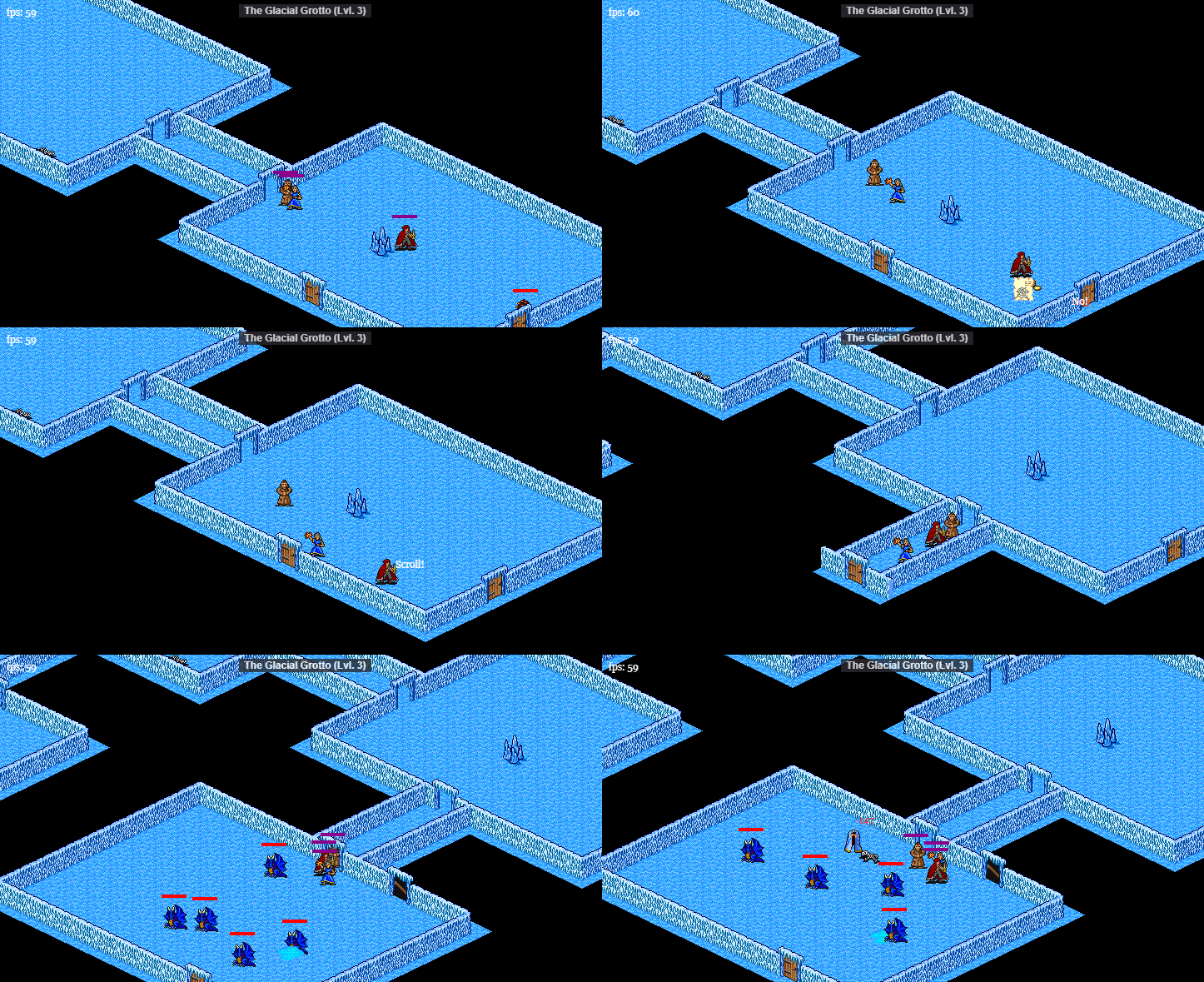
The game is on!
Characters don’t level up and don’t put the equipment they find in dungeons automatically, without the player’s click, and it’s not possible to enable this option. For this reason, Clickpocalypse 2 is not a fully zero-player game, but it’s hard to put it into the category of idle or incremental games. It’s a production that stands somewhere in between those genres.
Player input continues to be optional — the team traverses dungeons on their own, kills monsters, and their adventure continues even when the player is offline.
Dreeps
Dreeps (iOS, 3.99$) advertises itself as a game that is controlled by… an alert.
Before going to bed, the player sets an alarm clock. While sleeping, the robotic hero of the game also rests, while recovering the life points he lost during the day. In the morning, he rises to the sound of the alarm and begins his adventure, just as the player begins their day.
During the course of the day, the player can observe the struggles, battles, and adventures of their character at any time. Although Dreeps does not offer dialogue, the nice pixel-art graphics make watching the game extremely enjoyable.
This combination of RPG and Tamagotchi appealed to many people — the game won Indie Stream Awards 2015 for graphics and… game design! It’s not hard to imagine how such a robo-companion can give encouragement after a hard day, or in duller moments at work.