January 21, 2025
I'm tired of the Internet (Yes, again)
My most Millennial complain is that Internet used to be a friendlier place.
Less fake news. Less negativity. Less intrusive ads. Less pleeeeease-sign-to-my-newsletter-and-receive-10%-off pop-ups. Less "TOP TEN [insert year] [insert month] [insert your interest] with a generic list of clearly not researched products, reposted with a new date every month just to get more clicks. Less fighting for your attention with every psychological trick that was discovered in the last 20 years.
At the same time, I love the Internet. I love the freedom, inspiration and connections it gives. And, of course, all the knowledge - especially the niche, specialised one - which is getting more and more buried in the search results. Nothing makes me more happy than discovering a small blog created by an enthusiast of the topic, just rambling about their interests, not giving a single F about making their content SEO-friendly.
If you are with me and want to get from the Internet the best without having to deal with the worst... please read on.
What is RSS?
In human terms, RSS refers to simple text files with only necessary, updated information. All kinds of websites upload RSS feeds to their servers when they update content on their sites.
RSS aggregator is a program or an app that checks websites for their RSS feeds and present them in a nice way. Do not be afraid, there is nothing technical about it - in practise, you just add all the sites you like, and the app does the rest.
I wouldn't blame you if you didn't know too much about it. Yes, RSS is not popular at all. People have been saying they are dying for many years now, and then in 2013, Google shut down Google Reader, which was Google's RSS aggregator.
But Google didn't do this because people weren't using it - or at least, it wasn't the only reason. Shutting their RSS app seemed to be a good move because of... Google+, which was then 2 years old. In Google's pursuit of making their social media platform more popular, they needed more people to abandon alternatives for staying in touch with the news they wanted and move to Google+ instead.
That didn't work well, but Google Reader was never resurrected. Sad face.
Even though, RSS is still alive and well. It's extremely unlikely for a website to NOT have an RSS feed and common blogging platforms such as WordPress and Blogger do it automatically - so no need for a user to do or learn anything new to make RSS feed happen.
Why not stick to socials and bookmarks?
Not long ago, RSS used to be something I heard about, but nothing more. It seemed like a tool for nerds (as if I'm not one...), but pretty useless in a modern era.
Back then I used to think "I can just follow that thing I like on socials" or "I'll bookmark it and visit when I need it". I remember researching RSS feeds once, but they looked very clunky. Just not fun to use.
But a lot has changed since that time.
1. I can just follow that thing I like on social media
What were once fun sites to stay in touch with your friends, slowly but surely changed drastically over the years.
Firstly, most of the people I subscribed to are pushed away for the sake of "trending" things. I want to keep seeing things I followed, dammit!
Secondly, social media are promoting hate, closing its users into filter bubbles and pushing them into more and more radicalized directions - a phenomenon known as algorithmic radicalization.
The findings were troubling: Facebook, Instagram, and Twitter all suggested explicitly antisemitic and extremist content to the personas, directing them toward hateful myths and disinformation about Jews. The content often violated the platforms’ own hate speech policies. The more the personas engaged with platform recommendations–by liking suggested pages or following suggested accounts—the more antisemitic and extremist content they were fed.
Source: https://www.adl.org/resources/report/bad-worse-amplification-and-auto-generation-hate
This, of course, only of the many studies and changes - many of them recent, like Meta openly allowing discriminatory language against LGBT+ people - making certain sites less safe to be in.
It's hard to me to support sites like that in any way anymore, and therefore, I don't. I recently deleted my Twitter, Instagram and Facebook accounts in favor or more user-friendly sites, like Bluesky.
The rise of social media was the main thing that rendered RSS useless in the first place - but when the socials changed so much, maybe it would be worth going back?
2. I'll bookmark it and visit when I need it
Ha! As if. I had multiple folders with bookmarks, all "for later", all "to visit every once in a while". I never did. There was always something more urgent to do, and my once precious bookmarks were slowly rotting while I was watching that new youtube video.
Because on the Internet, there is always something fresh and flashy to see. So why would I go through some old bookmarks?
And because of that thinking, many interesting sites slipped through my fingers in favor of mindless scrolling and catching up with stuff that does not need any urgent catching up.
Enough of that.
Why RSS might be perfect for you!
1. Reading without all kinds of distractions
Website distractions: layout, ads
Let's be real - most of the popular sites do not have a nice, clean layout. There are links everywhere (because you need to stay at the site for as long as possible!), pop-ups, or even intrusive ads integrated into the articles. You might even find font hard to read, or color scheme not to your liking.
But that all goes away using an RSS aggregator.
In a RSS aggregator, you get plain text, images, videos. In many apps, you can customize colors, fonts and their sizes which automatically applies to all the articles.
Social distractions: number of likes, comments
While connecting with people is fun, seeing how "popular" the story is and what people think about it before even opening the link can influence a reader's opinion of it. Or even worse - it let them make an opinion before even reading article, which is a huge problem.
I enjoy judging the quality of news I read only by myself.
Algorithm distractions: "you might like", "trending"
You can choose an app that helps you discover new sites to subscribe to, but you can also stick with one that will only display what you added yourself. In chronological order. The end. No algorithms, no bullshit.
As a social media user, can be easily described using your location, gender, and few interests. New things to see and buy are recommended to you using "personalized" suggestions, but what they really do, is putting you, a real human being, into a few categories, limiting your view and actions by what the decision tree thinks you might like.
It's good to go beyond that. Explore interests lying outside your typical ones. Learn new things. Read articles from different sources.
Screw the algorithms.
2. Getting content from all around the web
Social medias are limited. They specialise in one thing and make it aaaaal about that thing. Instagram focuses on short videos (remember how it used to be a site for photos?), Twitter on short text, YouTube on longer videos. But what if I mostly want to read longer texts, or have a little bit of everything?
Websites, personal blogs, youtube, tumblr, reddit, bluesky (yes, each bsky profile has its own RSS feed, isn't that cool!) and many more - you can have everything in one place. No need to switch apps every few seconds.
3. Better focus and getting more from the things you choose to interact with
Over the years, I become concerned with my attention spawn, and I'm sure that 90% of my problems were directly related to how I used my phone. For the past year or so, I've been trying to improve my attention situation... with great success!
Since then I started to be more picky with what I consume. I became more irritated when what seemed like seconds watching uninteresting Reels merged into minutes. Into hours.
I now prefer to spend more time on one site or article and give it all my attention. Learning and reading have always been huge part of me, and I want them back.
So... How do you start?
RSS aggregators are sooo easy to use, and most of them are free! Trust me bro - just install one and give it a go. It's the perfect opportunity to dump all your bookmarks there and actually see what's new there!
I encourage you to be very picky with sites you follow. Less is more. It's not about having a fresh story every few seconds - RSS is a great tool to actually read and watch all the stuff you follow. Take what you need from the Web, without submitting to the things you don't want!
I've been trying out different apps and finally found one that fits for me - feeed. I'll have the screenshots do the work.
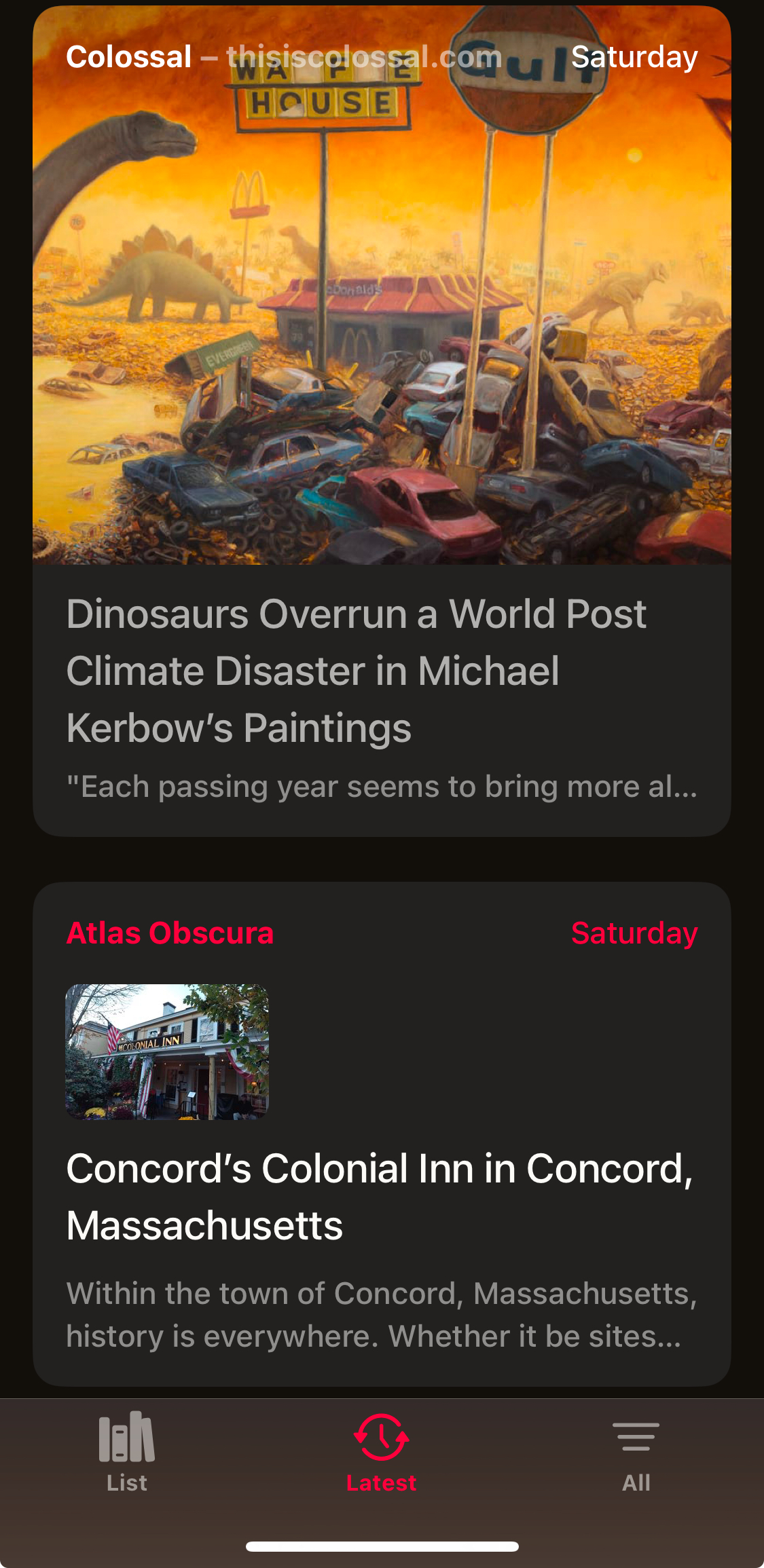
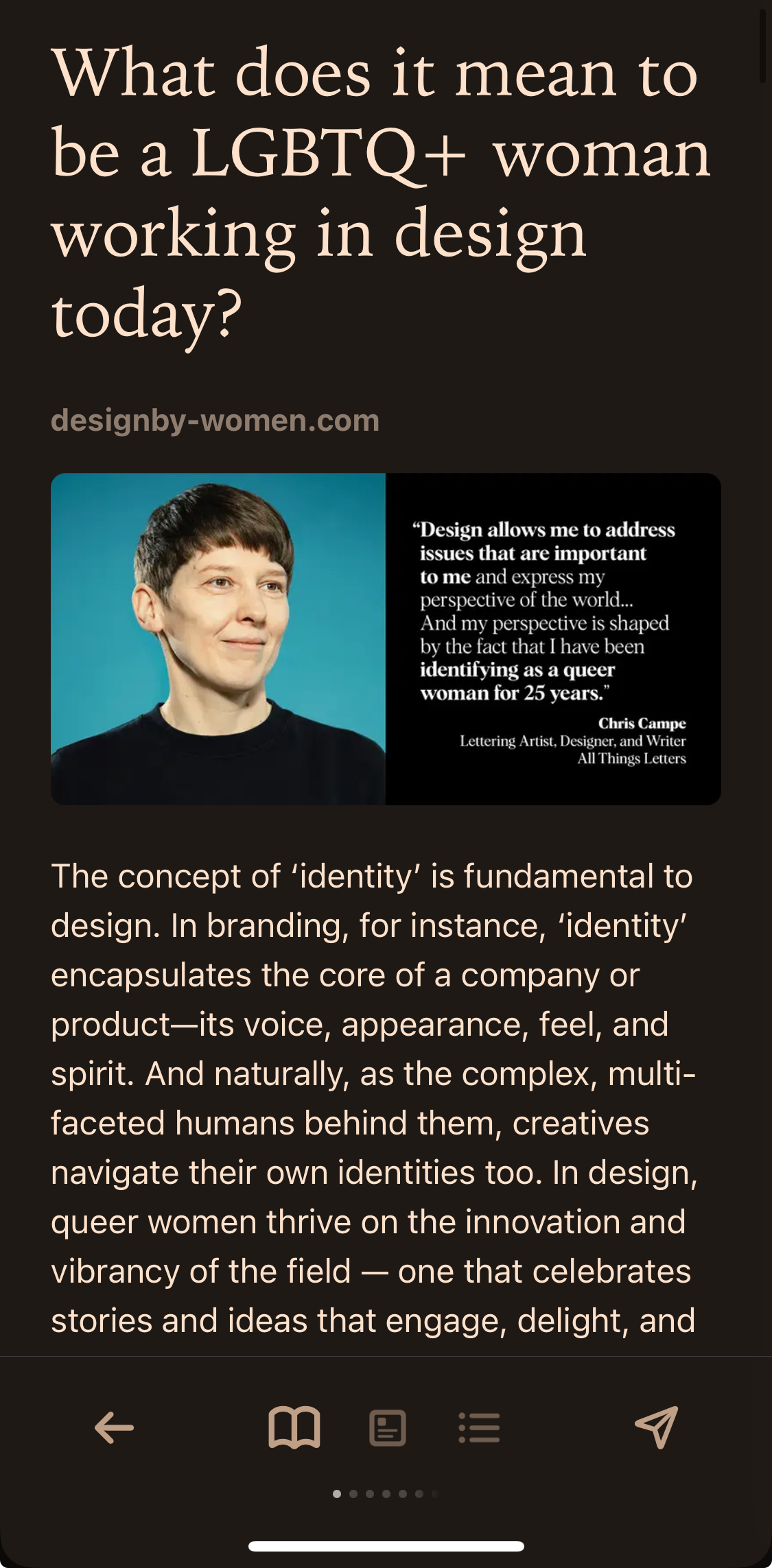
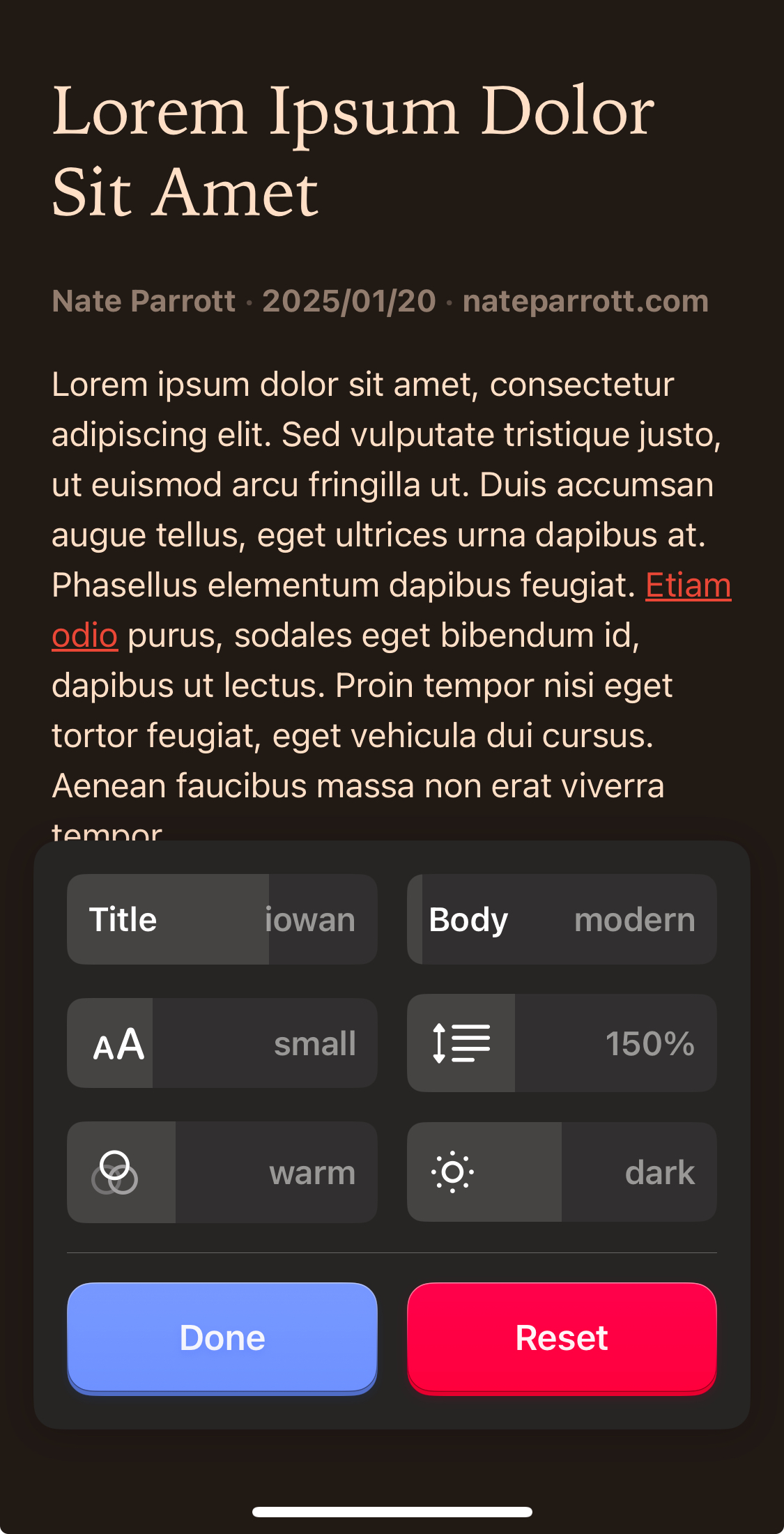
But as always, I encourage you to download a few and pick the one best suited for your needs.
Hopefully, my lengthy explanation made you appreciate RSS alittle bit more. Or maybe I even convinced you to try one?
Have fun!